flowchart LR
    A[DehI family<br>core MSA] --> B[Map 3BJX<br>structural boundary]
    B --> C[N-terminal MSA<br>residues 1–129]
    B --> D[C-terminal MSA<br>residues 162–296]
    B -.-> E[Exclude linker<br>residues 130–161]
    C --> F[N-terminal HHM]
    D --> G[C-terminal HHM]
    F --> H[HHalign<br>profile–profile comparison]
    G --> H
    I[CMD-like<br>PF02627 sequences] --> L[Cluster intact<br>80–119-aa monomers]
    L --> M[CMD subfamily HHMs]
    M --> J[External<br>comparisons]
    K[AhpD<br>IPR004674 profile] --> J
    F --> J
    G --> J
Internal duplication and a possible CMD-family origin of DehI
A structure-guided profile-HMM analysis of active-site enclosure and enzyme-fold evolution
Summary
The configuration-inverting 2-haloacid dehalogenase DehI has two structurally similar regions of approximately 130 amino acids. This analysis tests whether the two regions retain detectable sequence homology consistent with an ancient tandem duplication and fusion.
The N- and C-terminal regions were defined using the experimentally determined DehI structure 3BJX, extracted from a 69-sequence family alignment, converted into separate HH-suite profile hidden Markov models, and compared using HHalign. The profiles align over nearly their entire lengths with 99.54% HHalign probability, an E-value of 2.9 × 10⁻²³, and 17% direct sequence identity. The combination of low identity, strong profile-profile support, and broad alignment coverage is consistent with remote homology between the two DehI repeats.
Broad CMD-like and AhpD profiles produced no statistically convincing match to either DehI half. The compact CMD proteins were therefore divided into sequence-coherent monomer subfamilies before profile construction. This revealed reproducible but sub-threshold signals: the strongest were DehI-N/CMD_monomer_017 at 87.72% probability and DehI-N/CMD_monomer_015 at 85.88%. CMD_monomer_015 also matched DehI-C at 80.99% over 64 columns. The first three corrected P-values remain below 0.001 after a conservative correction across 54 comparisons, but none reaches the usual ≥95% HH-suite probability expected for a confident assignment.
If this relationship is confirmed, its importance extends beyond family assignment. Compact CMD-family proteins present their functional surface to bulk solvent, whereas DehI performs direct hydrolytic dehalogenation in a buried active-site cavity formed within its duplicated architecture. Tandem duplication and fusion could therefore have internalised an ancestral exposed surface, creating a new physicochemical environment and enabling fundamentally different catalytic chemistry. This is the central evolutionary hypothesis of the report; the present sequence analysis makes it plausible but does not yet establish the ancestry, direction, or historical order of those changes.
CMD/AhpD structures provide a relevant but deliberately separate precedent. The compact CMD-family protein TTHA0727 forms a six-core homohexamer, whereas trimeric AhpD packages six related cores as two core-like units within each chain. This correspondence shows that duplication and fusion have redistributed CMD-like cores between quaternary and tertiary structure in this broader group. It does not make AhpD an ancestor of, or an intermediate toward, DehI.
ImportantPrincipal result
The N- and C-terminal profiles align across 108 columns: 88% of the N-terminal model and 96% of the C-terminal model. This is a domain-scale match rather than a short conserved motif.
WarningExternal-family result
The current sequence-only profiles strongly support DehI internal duplication. The monomer-subfamily analysis supplies a credible DehI-to-CMD lead, especially CMD_monomer_015, but does not yet establish that relationship. Independent profile-database and structure-based tests are needed before treating it as a positive family assignment.
NoteWhy the possible CMD relationship matters
The proposed transition is not simply a change in substrate specificity. It would couple internal duplication and fusion to active-site enclosure: an ancestrally solvent-exposed CMD-like surface would become part of a buried, asymmetric reaction chamber in DehI. That change could alter water organisation, electrostatics, residue pKa values, substrate orientation, and halide-leaving group stabilisation simultaneously.
Biological question
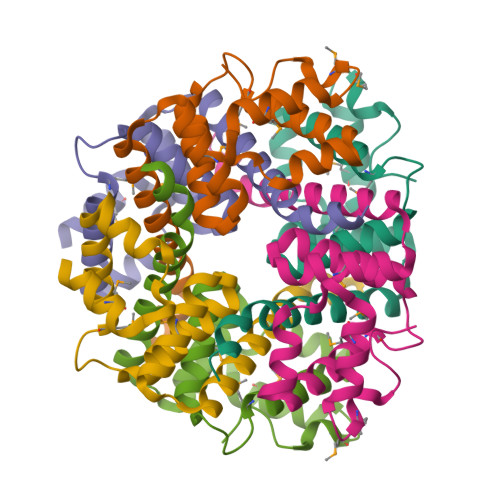
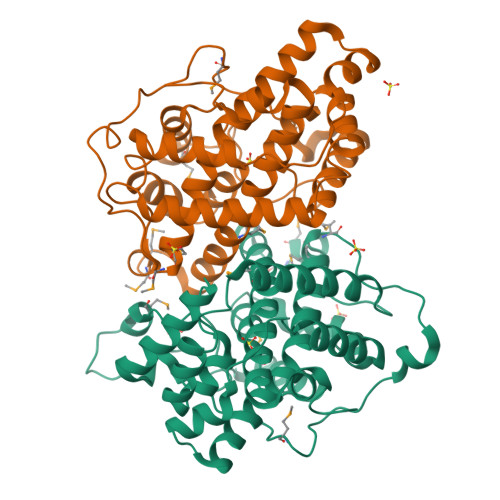
DehI from Pseudomonas putida PP3 is an unusual α-helical dehalogenase with a deep Stevedore knot. Its monomer contains two regions with closely similar structures but low pairwise sequence identity. The original structural study described two approximately 130-residue domains with about 16% sequence identity (PDB 3BJX; DOI: 10.1016/j.jmb.2008.02.035). A later topology analysis interpreted these regions as likely products of tandem sequence duplication and described the proline-rich arc connecting them (King et al., 2010).
The specific question addressed here is:
Does a profile-profile comparison of the DehI N- and C-terminal families recover statistically strong, domain-scale sequence homology after the linker is excluded?
A second, exploratory question asks whether either DehI repeat retains a detectable relationship to intact, compact carboxymuconolactone decarboxylase (CMD)-like proteins or alkyl hydroperoxide reductase D (AhpD) proteins.
Evolutionary hypothesis: from exposed surface to buried active site
Structural precedent for duplication and fusion
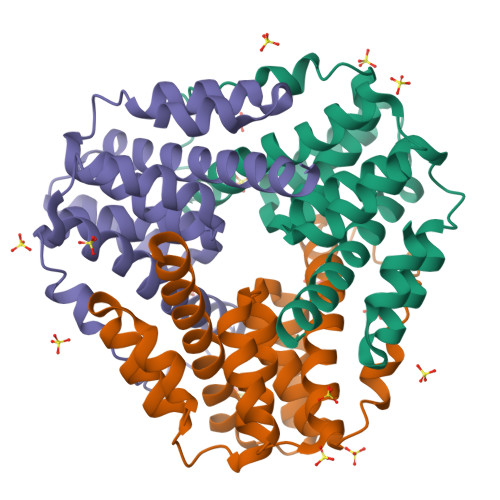
The oligomeric architectures of compact CMD-family proteins and AhpD provide precedent for duplication and fusion within the broader structural group. The compact CMD-family member TTHA0727 (PDB 2CWQ) forms a D3-symmetric homohexamer built from six single-core polypeptide chains. By contrast, Mycobacterium tuberculosis AhpD (PDB 1KNC) is a homotrimer whose subunit contains two structurally related core-like units. Structural comparison shows that the AhpD trimer and compact CMD hexamer therefore contain an equivalent six-core arrangement, with true two-fold relationships between separate CMD chains replaced by intrachain pseudo-dyads in AhpD (Ito et al., 2006; Andreeva et al., 2007).
This is evidence for an accessible type of evolutionary operation: related CMD-like cores can be duplicated and fused, transferring structural repetition from oligomeric assembly into a single polypeptide. It is not evidence that AhpD lies on a CMD-to-DehI trajectory, nor that any particular oligomer was a stable intermediate in DehI evolution. The DehI proposal below is an independent duplication-and-fusion hypothesis whose distinctive consequence would be active-site enclosure and formation of the knotted architecture.
The structural transition
The possible CMD-family connection is biologically consequential because the same local fold would operate in two very different physical settings. Compact CMD-family proteins are small all-α units in which the relevant binding or catalytic region remains accessible from bulk solvent. The structure of TTHA0727 identified a solvent-accessible cleft as its putative small-molecule binding site (Ito et al., 2006). In a structurally related AhpD-like protein, the catalytic cysteines and adjacent surface cavity remain externally accessible in both the monomer and oligomer (Nunn et al., 2011).
DehI presents the opposite biochemical context. Its two internally homologous regions pack into a pseudo-dimer surrounding a buried active-site cavity. The 3BJX structure places the proposed water-activating Asp189 in this enclosed site, supporting direct nucleophilic attack on either substrate enantiomer (Schmidberger et al., 2008).
Documented structural precedent
Compact CMD-family hexamer
six single-core chains
six single-core chains
duplication and fusion in the broader group
AhpD trimer
two related cores per chain
two related cores per chain
Supports: precedent for the architectural operation.
Does not imply: an AhpD-to-DehI lineage.
Independent DehI hypothesis
Compact CMD-like ancestral unit
functional surface exposed
functional surface exposed
tandem duplication and fusion
Two homologous units in one chain
Asymmetric packing and surface internalisation
Buried composite cavity and DehI chemistry
Status: testable hypothesis; intermediate states remain unknown.
In this model, each duplicated unit need not adopt an entirely unrelated local fold. The innovation occurs when fusion and subsequent packing change the context of the conserved fold. A previously exposed surface becomes an interdomain interface and reaction chamber, potentially changing several catalytically important properties at once:
- solvent and water organisation around the reacting centre;
- local electrostatics and catalytic-residue pKa values;
- substrate orientation and residence time;
- exclusion of non-productive bulk water; and
- stabilisation and release of the halide leaving group.
The two copies could then diverge asymmetrically. The C-terminal repeat could specialise in water activation and catalytic chemistry, while the N-terminal repeat increasingly contributes enclosure, substrate positioning, access control, and structural support. This would convert duplicated structural symmetry into a functionally asymmetric enzyme.
Evolutionary importance and fitness
This would be an unusually substantial evolutionary transition: duplication and fusion would connect a new overall topology, active-site burial, and new chemistry rather than merely retuning an existing exposed pocket. The CMD/AhpD oligomeric comparison establishes that duplication and fusion are structurally precedented in the group, but it does not identify a viable intermediate or show how dehalogenase activity emerged. Those questions remain independent of the architectural precedent.
An immediate selective advantage is plausible but cannot be reconstructed from the present sequences alone. Initial retention might also have been assisted by ancestral catalytic promiscuity, improved stability or assembly, increased dosage, or a period of effectively neutral persistence. Experimental studies of other enzyme families show that weak ancestral side activities can become the principal functions of post-duplication descendants (Voordeckers et al., 2012).
The ecological context supports selection for the mature activity without dating the original innovation. PP3 was isolated under growth selection on 2,2-dichloropropionic acid, and its dehI family gene lies on the mobile DEH element with its regulator, flanked by insertion sequences (Webster et al., 2025). Horizontal transfer could therefore have delivered an already functional DehI enzyme to PP3, where haloacid utilisation supplied an immediate advantage, even if the deeper duplication-and-fusion event occurred elsewhere.
Evidence boundaries
| Claim | Current evidence | Status |
|---|---|---|
| The two DehI regions share common ancestry | Near-identical repeat folds plus 99.54% HHalign probability across 108 columns | Strongly supported |
| CMD-core duplication and fusion have precedent in the broader CMD/AhpD structural group | Six single-core chains in the TTHA0727 hexamer correspond to two related cores per chain in the AhpD trimer | Supported structural precedent; not a direct lineage |
| DehI is related to compact CMD-family proteins | Three related CMD subfamily profiles give 74.52–87.72% probability; cluster 015 matches both DehI halves | Suggestive |
| Duplication and fusion internalised an exposed CMD-like surface | Structurally coherent with exposed CMD-family sites and the buried DehI cavity | Testable model |
| The ancestor performed modern γ-CMD chemistry | Lead CMD proteins are family annotations rather than experimentally verified γ-CMD enzymes | Not established |
| The fused ancestor immediately improved fitness through dehalogenation | Consistent with possible basal activity and later haloacid selection, but intermediates are unknown | Plausible, not demonstrated |
Analysis design
The workflow deliberately separates computation from presentation. Alignment splitting and HH-suite profile construction are performed by version-controlled scripts. This document reads the resulting files; it does not rerun HH-suite during website rendering.
Family alignment and structural reference
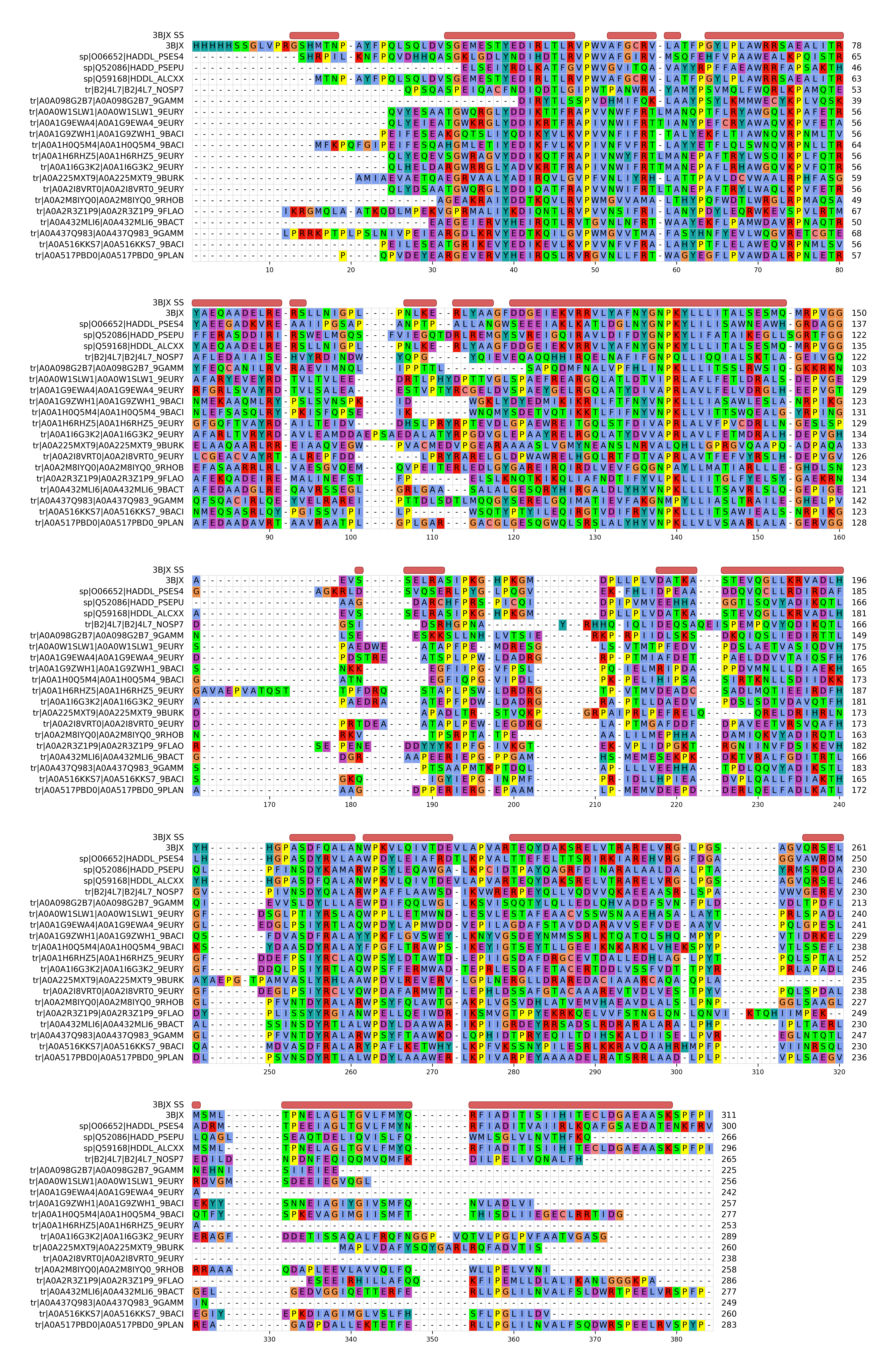
The input was the 69-sequence aligned FASTA file dehi_core_msa.fasta. The first record is the 3BJX chain-A reference. Its aligned sequence contains a 15-residue recombinant N-terminal expression tag followed by native DehI residues 1–296.
| Property | Value |
|---|---|
| Family sequences | 69 |
| Alignment columns | 384 |
| 3BJX aligned residues | 311 |
| 3BJX expression-tag residues | 15 |
| 3BJX native residues | 296 |
Secondary-structure context
The deposited HELIX records from 3BJX were mapped through the gaps in the 3BJX alignment row. Red rounded bars denote helices. The figure shows the first 20 family members for legibility; the domain splitting and HHM construction use all 69 sequences.
Defining and extracting the repeats
The last long helix of the N-terminal repeat ends at 3BJX residue 129. A proline-rich region occupies residues 130–161, and the next repeat begins at residue 162 with a short 310 helix followed by the first long C-terminal helix. The linker is therefore 32 residues by these structure-defined bounds, corresponding to the approximately 30-residue linker described informally.
| Region | Native 3BJX residues | Treatment |
|---|---|---|
| N-terminal repeat | 1–129 | Retained |
| Proline-rich linker | 130–161 | Excluded |
| C-terminal repeat | 162–296 | Retained |
The boundaries were mapped from native 3BJX residue numbers to MSA columns. The same columns were then extracted from every family member. All-gap columns were removed independently from each resulting alignment. The procedure is implemented in split_dehi_msa.py.
| Region | 3BJX residues | Source MSA columns | Output columns | Sequences |
|---|---|---|---|---|
| N | 1–129 | 16–154 | 139 | 69 |
| Linker excluded | 130–161 | 155–217 | — | — |
| C | 162–296 | 218–384 | 167 | 69 |
The N-terminal output has 139 aligned columns and the C-terminal output has 167. The ungapped 3BJX fragments contain 129 and 135 residues, respectively. All 69 input records are represented in both outputs.
HH-suite profile construction
HH-suite was chosen because HHalign directly compares profile HMMs and is designed to detect remote protein homology through alignment-to-alignment or HMM-to-HMM comparison (HH-suite documentation; Steinegger et al., 2019).
Each split FASTA alignment was converted to A3M format. A column was designated as a match state when fewer than 50% of sequences contained a gap (-M 50). Columns not meeting this condition were represented as insert states. HHmake then applied its standard sequence filtering and weighting before constructing each HHM.
reformat.pl fas a3m results/dehi_N_terminal_msa.fasta \
  results/dehi_N_terminal.a3m -M 50
reformat.pl fas a3m results/dehi_C_terminal_msa.fasta \
  results/dehi_C_terminal.a3m -M 50

hhmake -i results/dehi_N_terminal.a3m \
  -o results/dehi_N_terminal.hhm -name DehI_N_terminal
hhmake -i results/dehi_C_terminal.a3m \
-o results/dehi_C_terminal.hhm -name DehI_C_terminal| Profile | Match states | Sequences retained | Effective sequences |
|---|---|---|---|
| DehI N-terminal | 123 | 68/69 | 5.5 |
| DehI C-terminal | 113 | 68/69 | 6.0 |
HHmake retained 68 of 69 sequences in each model after its default redundancy and quality filters. The effective sequence counts (Neff) of 5.5 and 6.0 are much smaller than the raw sequence count because related sequences do not contribute as independent observations.
N-terminal versus C-terminal HHalign result
The two precomputed HHMs were compared directly:
hhalign \
  -i results/dehi_N_terminal.hhm \
  -t results/dehi_C_terminal.hhm \
  -o results/dehi_N_vs_C.hhr \
  -Oa3m results/dehi_N_vs_C.a3m \
-atab results/dehi_N_vs_C.tsv| Metric | Value |
|---|---|
| HHalign probability | 99.54% |
| E-value | 2.9 × 10⁻²³ |
| Profile score | 124.39 bits |
| Aligned columns | 108 |
| Direct identity | 17% |
| Profile similarity | 0.123 |
| Sum of posterior probabilities | 94.6 |
| N-profile coverage | 87.8% |
| C-profile coverage | 95.6% |
The alignment spans N-profile match states 5–113 and C-profile match states 2–112. It therefore covers most of both models rather than selecting a small highly conserved segment. The 17% direct identity lies in the range where pairwise sequence comparison alone is generally difficult, while the profile score remains strong because residue preferences and gap patterns are aggregated across the family.
Profile-profile alignment
The following is the consensus and 3BJX portion of the HHalign output. Digits in the Confidence lines are posterior alignment confidence on a 0–9 scale.
Q 3BJX       12 QLDVSGEMESTYEDIRLTLRVPWVAFGCRVLATFPGYLPLAWRR.SAEALITRYAEQAADELRERSLLNIGPLPNL-K-E 88 (129)
Q Consensus   5 e~eA~g~~~~vY~DIk~tLrVP~Vn~ifRtlA~yp~fl~~~W~~.~rP~~~T~~fe~aA~~lR~~~~~~~~~~~~~-~-~ 81 (123)
                +.++.+.++++|+|||+++|.|.||..+|+||+||+||..+|+. +||..+|.+|++++++++..+...+...+-+ . .
T Consensus   2 ~~~~~~~~~~l~~dI~~~h~~~~v~SdYR~LA~wP~~L~~~W~~.LkP~i~s~~y~~~~~~l~~~A~~~v~~lP~~v~l~ 80 (113)
T 3BJX        2 ATKASTEVQGLLKRVADLHYHHGPASDFQALANWPKVLQIVTDEvLAPVARTEQYDAKSRELVTRARELVRGLPGSAGVQ 81 (135)
Confidence      56889999999999999999999999999999999999999999 9999999999999999999888877765332 1 1

Q 3BJX       89 --RLYAAGFDDGEIEKVRRVLYAFNYGNPKYLL 119 (129)
Q Consensus  82 ~-~~~~~~~~~~~~~~ir~~l~~f~~vnPklLl 113 (123)
                 . .+.+.+ ++.++++|.+.+..|...-|-++|
T Consensus  81 ~~~L~~~~-~~~~i~~i~~l~~~F~~~lp~Lil 112 (113)
T 3BJX       82 RSELMSML-TPNELAGLTGVLFMYQRFIADITI 113 (135)
Confidence      1 555555 899999999999999988877654
Comparison with CMD-like and AhpD proteins
Defining the reference families
The external comparisons use two UniProt-derived, 60%-identity-reduced source sets already present in the project. These labels need care. Pfam PF02627 is named for CMD but represents the broader AhpD/CMD-like fold; bona fide AhpD proteins can also carry PF02627. The two groups below are therefore operational sequence sets, not mutually exclusive fold classifications. This relationship is independently reflected in the domain annotation of an AhpD example (UniProt P9WQB4), the HAMAP AhpD rule, and the 2OUW structural annotations.
- CMD-like: PF02627 records explicitly annotated as
carboxymuconolactone decarboxylase, excluding descriptions containingAhpD, and restricted to 80–220 residues to reduce fragments and fusions. - AhpD: records from the more specific IPR004674 source set, restricted to 120–230 residues.
| Profile set | Source records | Retained before HHmake | Length range | HHmake retained | Match states | Neff |
|---|---|---|---|---|---|---|
| CMD-like | 12,656 | 7,266 | 80–220 | 104 | 124 | 9.4 |
| AhpD | 178 | 172 | 120–229 | 121 | 175 | 4.2 |
Two non-standard residues in the CMD-like set were converted to X; none were converted in the AhpD set. Selection and normalization are implemented in prepare_cmd_ahpd_comparison.py. The retained sequences were aligned independently with MAFFT FFT-NS-1, converted to A3M with the same -M 50 match-state rule as the DehI halves, and passed to HHmake. The complete pipeline is in build_cmd_ahpd_hhsuite_profiles.sh.
HHalign comparison matrix
Each row is a direct comparison of two precomputed profiles. Because exactly one target was supplied in each run, the E-values are useful for comparing these pre-specified runs but are not calibrated to a large database search.
| Query | Template | Probability | E-value | Score | Aligned columns | Identity | Query coverage | Template coverage |
|---|---|---|---|---|---|---|---|---|
| DehI-N | DehI-C | 99.54% | 2.9 × 10⁻²³ | 124.39 | 108 | 17% | 87.8% | 95.6% |
| DehI-N | CMD-like | 0.21% | 0.28 | 9.46 | 10 | 30% | 8.1% | 8.1% |
| DehI-C | CMD-like | 0.14% | 0.42 | 8.08 | 1 | 0% | 0.9% | 0.8% |
| DehI-N | AhpD | 0.23% | 0.26 | 12.12 | 21 | 24% | 17.1% | 12.0% |
| DehI-C | AhpD | 4.12% | 0.01 | 19.65 | 72 | 15% | 63.7% | 41.1% |
| CMD-like | AhpD | 97.04% | 8.3 × 10⁻¹¹ | 55.41 | 43 | 26% | 34.7% | 24.6% |
The DehI-N/C result is qualitatively distinct from all four external comparisons: it combines near-certain probability, an extremely small E-value, and near-domain-scale coverage. DehI-C/AhpD is the only external comparison with appreciable span, aligning C-profile states 34–106 to AhpD states 9–87. Its probability remains very low, however, and the aligned region is rich in generic helical-protein preferences. It should therefore be treated as a hypothesis for structural and database-search follow-up rather than as evidence of common ancestry.
Best broad-family exploratory alignment: DehI-C versus AhpD
Q 3BJX       34 NWPKVLQIVTDEVLAPVARTEQYDAKSRELVTRARELVRGLP-GSAGVQRSELMSMLTPNELA------GLTGVLFMYQRF 107
Q Consensus  34 ~wP~~L~~~W~~~LkP~i~s~~y~~~~~~l~~~A~~~v~~lP-~~v~l~~~~L~~~~~~~~i~------~i~~l~~~F~~~ 106
                .-|+|...+.-. |+..++++.......-....|...+.+-| .-..+..+. +...++++++      .+|+.-..|.| |
T Consensus   9 ~lP~yAKDlklN~l~~vl~~~~Lt~~q~~g~aLA~A~a~r~~~l~~ai~~eA-~~~ls~~~~~aA~aaAslMaMNNVyYRf  87
This 72-column match has 15% identity and a sum of posterior probabilities of 37.5. It is visually plausible, but HHalign assigns only 4.12% probability; the statistical assessment, rather than visual resemblance alone, governs the interpretation.
CMD-like versus AhpD control
CMD-like and AhpD align at 97.04% probability over a 43-state core. This is consistent with their shared broader classification and shows that the external profiles retain a detectable common signal. It is not a fully independent positive control, because the CMD-like PF02627 umbrella overlaps conceptually with AhpD/CMD-like proteins even after annotation-based separation.
Monomer-focused CMD analysis
Why a subfamily analysis was needed
The broad PF02627 alignment combines many divergent CMD-like lineages. A profile averaged across that entire set can lose a relationship retained in only one lineage. The 1,316 intact, explicitly CMD-annotated proteins of 80–119 residues were therefore clustered with MMseqs2 at 30% sequence identity and 70% bidirectional coverage. This produced 160 clusters. The 27 clusters containing at least five proteins were retained for profile analysis; the smaller clusters do not contain enough sequences to support a useful family HMM.
Each retained cluster was aligned independently with MAFFT and converted to an HH-suite profile. Both DehI halves were compared with every cluster, giving 54 pairwise tests. The complete ranking, including cluster sizes, effective sequence counts, model lengths and coverage, is available as the monomer-cluster result table, with cluster composition in the cluster manifest. The workflow is implemented in build_cmd_monomer_cluster_profiles.sh.
Lead monomer-subfamily matches
| DehI query | CMD cluster (representative) | Sequences | Profile Neff | Probability | Pairwise P-value | P × 54 | Aligned columns | Query / CMD coverage | Identity |
|---|---|---|---|---|---|---|---|---|---|
| N-terminal | 017 (A0ABY7GUB4) | 9 | 2.9 | 87.72% | 3.4 × 10⁻⁶ | 1.84 × 10⁻⁴ | 42 | 34% / 52% | 12% |
| N-terminal | 015 (A0ABP8DVF7) | 10 | 3.4 | 85.88% | 5.3 × 10⁻⁶ | 2.86 × 10⁻⁴ | 48 | 39% / 45% | 17% |
| C-terminal | 015 (A0ABP8DVF7) | 10 | 3.4 | 80.99% | 1.2 × 10⁻⁵ | 6.48 × 10⁻⁴ | 64 | 57% / 60% | 23% |
| C-terminal | 003 (A0A8A7KB27) | 117 | 5.3 | 74.52% | 2.7 × 10⁻⁵ | 1.46 × 10⁻³ | 78 | 69% / 70% | 17% |
Representative monomer-focused alignment
The DehI-C/CMD_monomer_015 alignment is the most informative single alignment to display. DehI-N/CMD_monomer_017 has the highest probability, but its match is only 42 columns long. The cluster-015 C-terminal match spans 64 columns and, importantly, the same CMD profile also matches the homologous DehI N-terminal repeat. It therefore exposes the sequence-level basis of the most coherent external-family lead.
| Metric | Value |
|---|---|
| HHalign probability | 80.99% |
| Pairwise P-value | 1.2 × 10⁻⁵ |
| P × 54 | 6.48 × 10⁻⁴ |
| Aligned columns | 64 |
| Direct identity | 23% |
| DehI-C / CMD coverage | 57% / 60% |
| Sum of posterior probabilities | 47.6 |
Q 3BJX            2 ATKASTEVQGLLKRVADLHYHHGPASDFQALANWPKVLQIVTDEvLAPVARTEQYDAKSRELVTRARE 69
Q Consensus       2 ~~~~~~~~~~l~~dI~~~h~~~~v~SdYR~LA~wP~~L~~~W~~.LkP~i~s~~y~~~~~~l~~~A~~ 68
                    +++++.+.+.+|+.|++.+|+-  +-.||..|+-|..|. .|.. +.-.+........-.+.+..|..
T Consensus       9 ~~~a~~~s~~ll~a~~~~~G~v--PNm~~~~A~SP~~L~-~~l~.l~~~~~~g~L~~k~re~IaLavs 72
T A0ABP8DVF7      9 LDDAPAGTQRILDNVGAQFGFV--PNMFRTIASNPTVLE-AVTT.LQGTMSR-VLDAKTRHSIALAVS 71
Confidence          4678999999999999999973  558999999999886 5777 76666665555555554444443
The long run of high posterior-confidence positions shows that the score does not arise from one isolated motif. Nevertheless, this remains a partial-profile match with 80.99% HH-suite probability, below the conventional high-confidence range. It is displayed as the evidence underlying the hypothesis, not as proof of CMD-family ancestry. The complete, unedited output is available in the raw HHalign result.
These results are much stronger than the pooled CMD profile, showing that subfamily stratification was important. CMD_monomer_015 is especially interesting because the same external profile gives the leading match to both homologous DehI halves. Its C-terminal comparison also spans more than half of both models. Cluster 003 gives the broadest alignment, but at 74.52% probability it is the least secure of the four leads.
The three lead CMD clusters are themselves homologous at profile level:
Their mutual profile similarity argues that the signals arise from a coherent region of CMD sequence space rather than three unrelated annotations. However, the lead clusters were selected after inspecting the DehI comparisons, so this cross-comparison is a consistency check rather than independent confirmation.
WarningInterpretation of the monomer signal
The corrected P-values show that these alignments are unlikely to be ordinary pairwise chance scores within this 54-test experiment. HH-suite probability also incorporates whether a match resembles true homologues rather than common background alignments, and the maximum here is 87.72%, below the conventional high-confidence range. The short 42–48-column N-terminal matches and modest profile diversity (Neff 2.9–3.4) are additional reasons to describe the result as suggestive evidence, not a family assignment.
Interpretation
Three features make this result supportive of internal homology:
- High profile probability. HHalign assigns a 99.54% probability to the N/C relationship.
- Domain-scale coverage. The 108 aligned columns cover 88% of the N model and 96% of the C model.
- Remote rather than trivial similarity. Direct identity is only 17%, yet conserved residue patterns remain detectable when information is combined across 69 family members.
Together with the near-identical structural folds reported for 3BJX, this strongly supports tandem duplication of an ancestral domain followed by divergence of the two copies within DehI.
The compact-CMD hexamer/AhpD trimer correspondence adds a useful, bounded observation: duplication and fusion of CMD-like cores has precedent within the broader structural group, and homologous cores can be redistributed between quaternary and tertiary organization. This comparison supplies plausibility for the evolutionary operation itself. It does not place AhpD on the path to DehI and is not used here to infer a stable DehI intermediate.
The external comparisons do not yet identify the ancestral domain definitively. However, separating intact CMD monomers into coherent subfamilies changes the picture: three related CMD profiles give probabilities of 74.52–87.72%, and CMD_monomer_015 matches both DehI halves. This makes a monomeric CMD relationship the strongest current external hypothesis. Because the probabilities remain below 95%, the most defensible conclusion is: strong evidence for internal DehI N/C homology and suggestive, but not yet conclusive, evidence connecting those repeats to a subset of monomeric CMD proteins. No comparable sequence-only support was recovered for AhpD.
If that CMD-family connection is validated, the evolutionary implication is more substantial than ordinary substrate or catalytic diversification. Duplication and fusion would have converted an ancestrally solvent-exposed functional surface into a buried interdomain cavity. The local fold could be retained while its biochemical context changed completely: solvent access, water organisation, electrostatics, substrate geometry, and leaving-group stabilisation would all become properties of the newly formed composite site. Subsequent asymmetric divergence could then concentrate direct hydrolytic catalysis in the C-terminal repeat while the N-terminal repeat increasingly provided enclosure and substrate positioning.
The conservative synthesis is therefore: DehI is strongly supported as an internally duplicated enzyme, and a subset of compact CMD-family proteins is the leading candidate for the ancestral fold. If this ancestry is confirmed, DehI would represent an unusual surface-to-cavity transition in which duplication and fusion created a new overall topology and a new catalytic microenvironment capable of different chemistry.
NoteWhat the result does not prove
HHalign measures compatibility between two profile models. It does not by itself establish the direction of ancestry, show that the ancestral protein performed modern γ-CMD chemistry, reconstruct the duplication-and-fusion intermediates, place AhpD on the DehI lineage, or demonstrate when dehalogenase activity first became selectively useful. Those questions require structural surface mapping, phylogenetic and genomic context, ancestral reconstruction, and biochemical testing.
Statistical qualification
Only one template HMM was searched (Searched_HMMs 1). Consequently, the reported E-value and P-value are identical (2.9 × 10^-23^); this is not an E-value corrected for a large profile database. The probability, score, and especially the broad alignment coverage remain directly informative for this pre-specified N-versus-C comparison.
Secondary structure was not included in the HHalign score (SS = 0, reported as missing dssp). This makes the profile match a sequence-derived result rather than one driven by the known structural similarity.
Robustness checks and next analyses
The following tests would strengthen the evolutionary interpretation:
- Rebuild both profiles after removing 3BJX and repeat the comparison, ensuring that the structural reference is not driving the result.
- Repeat profile construction with match-state thresholds of 30%, 50%, and 70% gaps and compare the aligned cores.
- Search both DehI profiles against the same broad, curated HH-suite database and test whether their strongest domain-level matches overlap. A database search supplies the calibration and competing alternatives absent from these one-template HHalign runs.
- Build structure-informed profiles for the lead CMD monomer subfamilies and compare representative structures with Foldseek/DALI. This is the most direct follow-up to the suggestive sequence-profile matches.
- Superpose representative lead-cluster CMD structures or AlphaFold models on each DehI repeat, then quantify solvent-accessible surface area at homologous positions. The critical prediction is that a CMD-exposed surface maps to the buried DehI interdomain cavity.
- Map aligned CMD/DehI positions onto the 3BJX active site and distinguish residues inherited from the ancestral fold from residues recruited after duplication for water activation, substrate binding, and halide handling.
- Test the CMD_monomer_015 relationship against independently collected CMD and DehI sequence sets so that subfamily selection and validation use separate data.
- Reconstruct plausible pre-duplication and early fused ancestral proteins. Structural modelling followed by biochemical testing could ask whether fusion alone creates a cavity or basal haloacid activity before extensive sequence optimisation.
Reproducibility and downloads
The report uses precomputed HH-suite output so that the website can be rendered without installing native bioinformatics software. The Python dependencies are managed by uv; HH-suite 3 is required only when regenerating the profiles.
Scripts
split_dehi_msa.py— map the 3BJX boundaries through the family MSA and extract both repeats.build_dehi_hhsuite_profiles.sh— convert the alignments to A3M, construct both HHMs, and run HHalign.prepare_cmd_ahpd_comparison.py— define, filter, and normalize the operational CMD-like and AhpD sequence sets.build_cmd_ahpd_hhsuite_profiles.sh— align both external families, construct their HHMs, and run all five external profile comparisons.analyse_cmd_monomer_clusters.py— split the compact CMD set into sequence-coherent clusters and summarize all DehI comparisons with multiple-testing correction.build_cmd_monomer_cluster_profiles.sh— cluster intact CMD monomers, construct subfamily HHMs, and compare each profile with both DehI halves.
Alignments and sequences
Profiles and comparison output
- N-terminal HHM
- C-terminal HHM
- HHalign report
- HHalign pairwise A3M
- HHalign per-column table
- Domain-splitting report
- CMD-like profile HHM
- AhpD profile HHM
- DehI-N versus CMD-like report
- DehI-C versus CMD-like report
- DehI-N versus AhpD report
- DehI-C versus AhpD report
- CMD-like versus AhpD report
- External-family filtering summary
- CMD monomer cluster manifest
- Ranked DehI-versus-CMD-monomer results
To regenerate the derived files locally:
uv run python split_dehi_msa.py
./build_dehi_hhsuite_profiles.sh
uv run python prepare_cmd_ahpd_comparison.py
./build_cmd_ahpd_hhsuite_profiles.sh
./build_cmd_monomer_cluster_profiles.sh
quarto render report.qmd